
: Chapman's and Trigger Points
Comprehensive OMT reference hub, interactive cheat sheets, and board review notes for COMLEX Level 1, 2-CE, and 3.
Key Takeaway
Chapman points are diagnostic viscerosomatic reflex points in deep fascia resulting from sympathetic hypercongestion. Counterstrain tenderpoints reflect somatic dysfunction without referred pain. Myofascial trigger points are hyperirritable muscular nodules producing characteristic referred pain and local twitch responses. Master anterior/posterior landmarks and differential features for COMLEX.
3-Way Point Comparison Matrix
COMLEX frequently tests the differentiation between Chapman points, counterstrain tenderpoints, and myofascial trigger points. The table below outlines key diagnostic and clinical distinctions.
| Feature | Chapman Point | Counterstrain Tenderpoint | Myofascial Trigger Point |
|---|---|---|---|
| Primary Etiology | Viscerosomatic reflex (sympathetic hypertonicity) | Somatic dysfunction (neuromuscular spindle imbalance) | Muscular strain, microtrauma, or overuse |
| Tissue Texture | Small (2–3 mm), firm, smooth, 'tapioca-like' nodule in deep fascia | Tender spot in muscle, tendon, ligament, or fascia | Taut band with hyperirritable nodule |
| Location Pattern | Paired Anterior (diagnostic) and Posterior (treatment) | Anterior or posterior muscle belly or attachment | Enclosed within skeletal muscle belly or tendon |
| Referred Pain | No referred pain (exquisite local pain only) | No referred pain (localized tenderness only) | Characteristic predictable referred pain pattern |
| Local Twitch Response | Absent | Absent | Present (palpable or visual muscle twitch) |
| Treatment Modality | Sustained gentle circular / rotary pressure (20–60 sec) | Passive positioning into comfort / ease for 90 sec | Ischemic compression, spray & stretch, dry needling, MET |
Visual Chapman Reflex Points Map
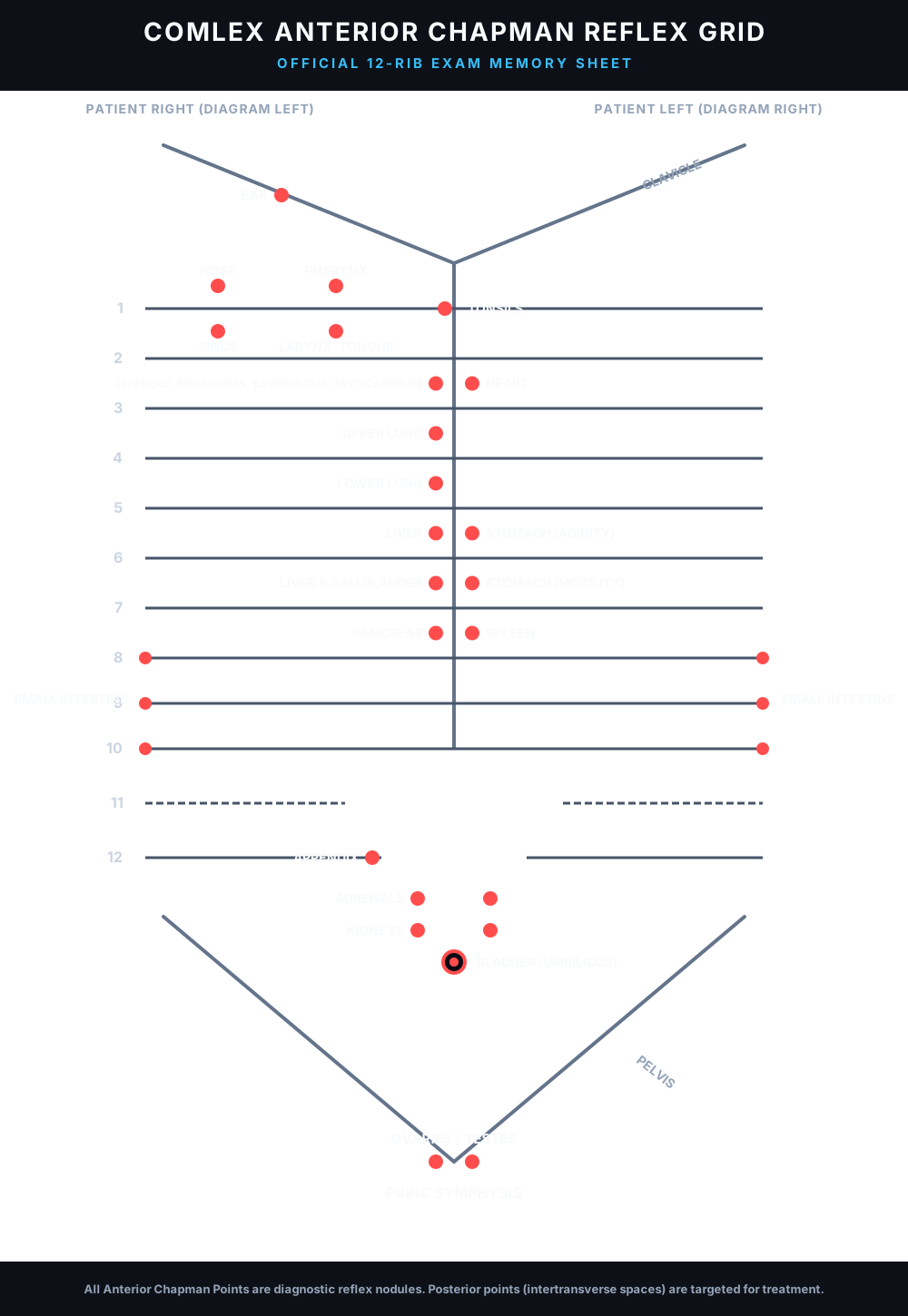
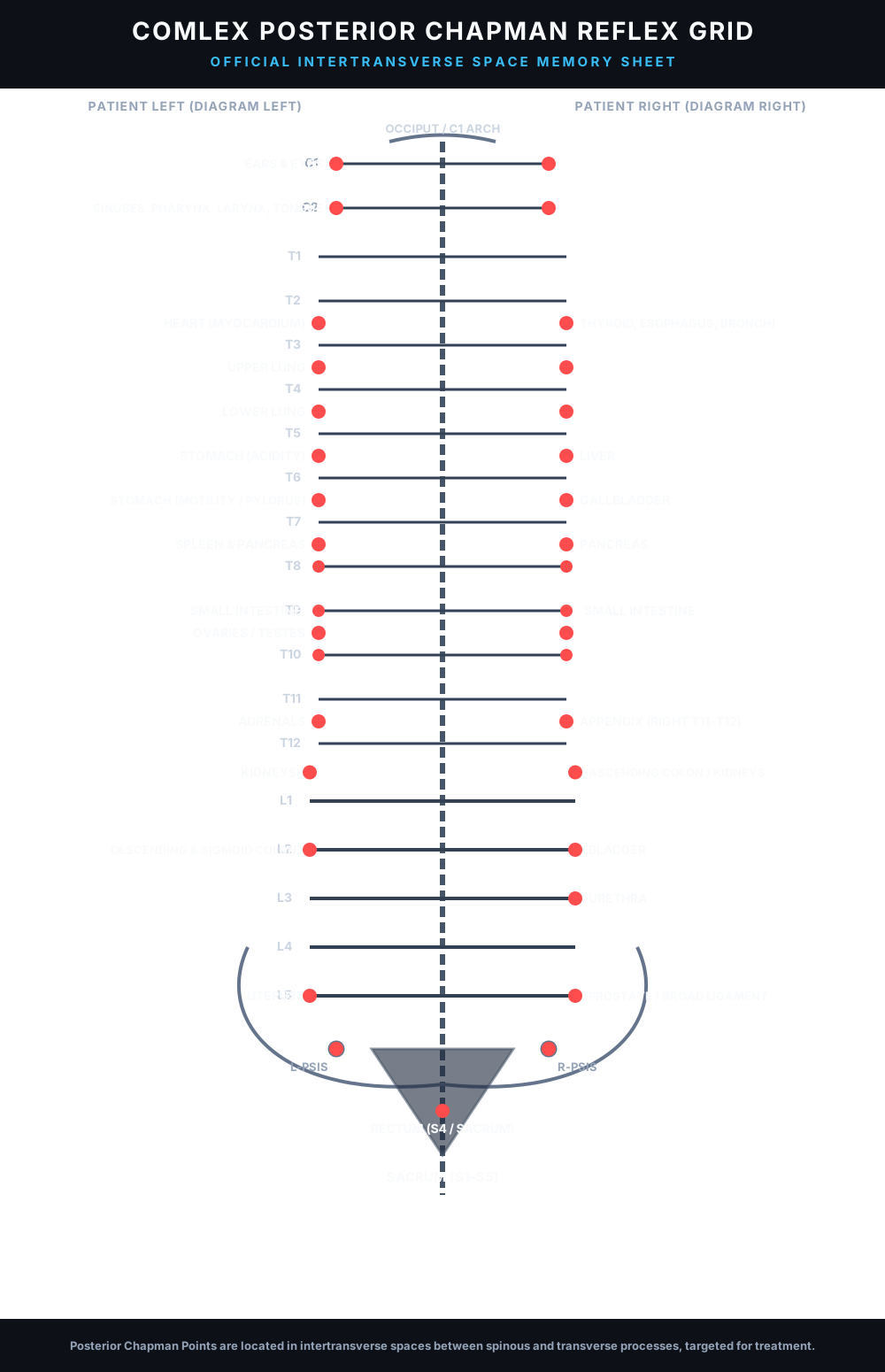
The classic COMLEX board-exam anterior and posterior reflex schematics. Compare the anterior diagnostic 12-rib grid with the posterior intertransverse treatment points side by side. Click any diagram to enlarge in full-screen view.
Chapman Points Anatomy Matrix
Anterior Chapman points are primarily used for diagnosis (exquisitely tender nodular swellings in deep fascia), while posterior points are frequently targeted for treatment or confirmation.
Head, Neck, & Upper Respiratory
| Organ / Region | Anterior Chapman Location | Posterior Chapman Location |
|---|---|---|
| Eyes | Anterior humerus (surgical neck) / 1st ICS near sternum | C1 transverse process (posterior arch) |
| Ears (Otitis Media) | Superior border of clavicle, medial 1/3 | C1 posterior arch / C1 TP |
| Sinuses (Sinusitis) | 2nd intercostal space near sternum (under clavicle) | C2 intertransverse space |
| Pharynx / Larynx | 1st intercostal space near sternum | C2 intertransverse space |
| Thyroid Gland | 2nd intercostal space near sternum | T2 intertransverse space |
| Tongue | 2nd rib cartilage junction | C2 intertransverse space |
Cardiopulmonary System
| Organ / Structure | Anterior Chapman Location | Posterior Chapman Location |
|---|---|---|
| Heart (Angina / MI) | 2nd intercostal space near sternum (Left) | T2–T3 intertransverse space (Left) |
| Lungs (Upper Lobe) | 3rd intercostal space near sternum | T3–T4 intertransverse space |
| Lungs (Lower Lobe) | 4th intercostal space near sternum | T4–T5 intertransverse space |
| Bronchi / Trachea | 2nd intercostal space near sternum | T2–T3 intertransverse space |
Gastrointestinal System
| Organ / Structure | Anterior Chapman Location | Posterior Chapman Location |
|---|---|---|
| Esophagus | 2nd intercostal space near sternum | T2–T3 intertransverse space |
| Stomach (Hyperacidity) | 5th intercostal space near sternum (Left) | T5–T6 intertransverse space (Left) |
| Stomach (Motility / Pylorus) | 6th intercostal space near sternum (Left) | T6–T7 intertransverse space (Left) |
| Liver | 5th & 6th intercostal spaces near sternum (Right) | T5–T6 intertransverse space (Right) |
| Gallbladder (Cholecystitis) | 6th intercostal space near sternum (Right) | T6–T7 intertransverse space (Right) |
| Pancreas | 7th intercostal space near sternum (Left) | T7–T8 intertransverse space (Left) |
| Spleen | 7th intercostal space near sternum (Left) | T7–T8 intertransverse space (Left) |
| Small Intestine (Jejunum / Ileum) | 8th, 9th, & 10th intercostal spaces near sternum | T8–T10 intertransverse spaces |
| Appendix (Appendicitis) | Tip of 12th rib (Right) | T11–T12 transverse process (Right) |
| Ascending Colon | Proximal 1/3 of right IT band (femur) | T11–L1 intertransverse space (Right) |
| Transverse Colon | Middle 1/3 of IT band / periumbilical | T12–L2 intertransverse space |
| Descending / Sigmoid Colon | Distal 1/3 of IT band (Left) / Tip of 12th rib (Left) | L1–L3 intertransverse space (Left) |
| Rectum | Lesser trochanter of femur | Sacrum near S4 |
Genitourinary & Pelvic Organs
| Organ / Structure | Anterior Chapman Location | Posterior Chapman Location |
|---|---|---|
| Kidneys (Nephrolithiasis) | 1 inch superior and 1 inch lateral to umbilicus | T12–L1 intertransverse space |
| Adrenal Glands | 2 inches superior and 1 inch lateral to umbilicus | T11–T12 intertransverse space |
| Urinary Bladder | Periumbilical region / Pubic symphysis superior border | L2 intertransverse space / UP of sacrum |
| Urethra | Pubic tubercle superior margin | L3 intertransverse space |
| Ovaries / Testes | Superior pubic ramus (anterior) | T9–T10 intertransverse space |
| Uterus | Inferior pubic ramus | L5 intertransverse space / PSIS |
| Prostate / Broad Ligament | Lateral IT band (posterior margin) / Pubic ramus | PSIS / Sacral base |
Board Traps & Mnemonics
12th Rib Tip Rule: Tender nodule at the tip of the RIGHT 12th rib indicates Appendix (Appendicitis). Tender nodule at the tip of the LEFT 12th rib indicates Sigmoid Colon / Descending Colon.
Umbilicus Reference Rule: 1 inch UP and 1 inch OUT = Kidneys. 2 inches UP and 1 inch OUT = Adrenals. Periumbilical / Pubic Symphysis = Bladder.
2nd Intercostal Space Overload: Left 2nd ICS = Heart. Right / Bilateral 2nd ICS = Sinuses, Thyroid, Esophagus, Bronchi.
COMLEX Board Practice Vignettes
Q1: A 24-year-old male presents with acute right lower quadrant abdominal pain, nausea, and low-grade fever. Physical exam reveals LRQ rebound tenderness. An exquisite, pea-sized fascial nodule is palpated at the tip of the right 12th rib. What is the most likely diagnosis?
A: Acute Appendicitis. The anterior Chapman point for the appendix is located at the tip of the right 12th rib (posterior point: right T11–T12 transverse process). Note that the left 12th rib tip corresponds to the sigmoid colon.
Q2: A 42-year-old female presents with severe colicky right flank pain radiating to the groin with microscopic hematuria. On osteopathic exam, a tender, rubbery nodule is identified 1 inch superior and 1 inch lateral to the umbilicus. Which organ system reflex is identified?
A: Kidney (Nephrolithiasis / Urolithiasis). The anterior Chapman point for the kidney is located 1 inch UP and 1 inch OUT from the umbilicus (posterior point: T12–L1 intertransverse space). By contrast, 2 inches UP and 1 inch OUT corresponds to the adrenal gland.
Q3: A 35-year-old computer programmer presents with persistent neck and upper back tightness. On exam, pressing a hyperirritable nodule in the levator scapulae muscle produces a sudden twitch response and referred pain into the ipsilateral shoulder. How is this finding classified?
A: Active Myofascial Trigger Point. Unlike Chapman points and counterstrain tenderpoints, myofascial trigger points reside within a taut muscle band, produce a local twitch response upon snapping palpation, and cause characteristic referred pain.
Q4: A 58-year-old male with a history of chronic heartburn presents for routine checkup. Palpation reveals a tender, tapioca-like nodule at the left 5th intercostal space near the sternum. What visceral dysfunction is indicated?
A: Stomach Hyperacidity (GERD / Gastritis). The anterior Chapman point for stomach acidity is located at the left 5th intercostal space near the sternum (posterior point: left T5–T6 intertransverse space). Left 6th ICS indicates stomach motility/pylorus.
Q5: A 64-year-old male presents with exertional chest tightness. Electrocardiogram shows ST-segment changes. Osteopathic examination reveals a tender nodule at the left 2nd intercostal space adjacent to the sternum. Which structure is involved?
A: Heart (Myocardium / Coronary artery disease). The anterior Chapman point for the heart is located at the left 2nd intercostal space near the sternum (posterior point: left T2–T3 intertransverse space).
Source
Based on the publicly available table of contents and topic organization of OMM Review: A Comprehensive Review of Osteopathic Medicine. All notes are original; no copyrighted text, figures, or full source material is included.