Clinical Microbiology & Infectious Disease
Dichotomous Gram-stain decision trees, bacterial exotoxin mechanisms (cAMP, EF-2, SNARE cleavage), viral BOAR and Baltimore taxonomy, dimorphic fungi, and classic parasitic board vignette clues.
Gram-Positive Cocci Decision Tree
Catalase → Coagulase → Hemolysis → Antibiotic Disc Sensitivities
Staphylococcus aureus
Clusters ("grapes"). Ferments mannitol on mannitol salt agar (yellow colonies).
Key Virulence: Protein A (binds Fc portion of IgG, prevents opsonization and phagocytosis). Coagulase forms fibrin clot around organism.
Diseases: Acute infective endocarditis (tricuspid in IVDU), osteomyelitis (most common cause overall), septic arthritis, bullous impetigo, toxic shock syndrome (TSST-1), scalded skin syndrome (exfoliatin), rapid-onset food poisoning (preformed enterotoxin in mayo/custards, 2-6 hrs).
Staph epidermidis vs Saprophyticus
Novobiocin sensitivity test differentiates these two coagulase-negative staphs.
Mnemonic: "NO Staph (NOvobiocin = Saprophyticus resistant, Epidermidis sensitive)"
Streptococcus pyogenes (Group A)
Pyrrolidonyl arylamidase (PYR) positive. Chains of cocci. Hyaluronic acid capsule.
M-Protein: Antiphagocytic virulence factor; molecular mimicry triggers Rheumatic Fever (Jones criteria: Joints, Carditis, Nodules, Erythema marginatum, Sydenham chorea).
Sequelae: Rheumatic fever occurs ONLY after pharyngitis. Post-streptococcal glomerulonephritis (PSGN) can occur after pharyngitis OR skin impetigo!
Streptococcus agalactiae (Group B)
CAMP test positive (arrowhead hemolysis with S. aureus). Hippurate test positive.
Clinical Focus: #1 cause of neonatal sepsis, neonatal meningitis, and neonatal pneumonia.
Screening & Prophylaxis: Pregnant women screened at 35-37 weeks via rectovaginal swab. Intrapartum IV Penicillin G or Ampicillin given if positive.
Mnemonic: "B for Babies, Bacitracin-resistant".
Streptococcus pneumoniae
Lancet-shaped diplococci. Bile soluble. Polysaccharide capsule (Quellung reaction positive).
Diseases (MOPS): #1 cause of Meningitis (adults), Otitis media (children), Pneumonia (typical, lobar, "rusty" sputum), Sinusitis.
IgA Protease: Cleaves secretory IgA to colonize respiratory mucosa.
Splenectomy Risk: Encapsulated; asplenic patients (sickle cell disease) suffer catastrophic septic shock without vaccination (PCV13 / PPSV23).
Viridans Strep & Enterococci
Insoluble in bile. Differentiated by growth in 6.5% NaCl and bile esculin agar.
Strep mutans & sanguinis: Normal oral flora. S. sanguinis makes dextrans from glucose to adhere to pre-damaged heart valves (subacute bacterial endocarditis after dental procedures).
Enterococcus (faecalis / faecium): Grows in 6.5% NaCl and bile (PYR+). Causes biliary tract infections, subacute endocarditis after GI/GU procedures. VRE encodes vanA gene (D-Ala-D-Lac substitution).
Strep gallolyticus (bovis): Grows in bile but NOT 6.5% NaCl. Associated with colon cancer when presenting as bacteremia/endocarditis!
Gram-Positive Bacilli & Branching Rods
Spore-Forming Aerobes vs Anaerobes, Non-Spore Bacilli, and Filamentous Branching Actinomycetes
Bacillus anthracis & cereus
Large boxcar-shaped rods in chains. Anthracis capsule is unique (poly-D-glutamic acid polypeptide, NOT polysaccharide!).
- Cutaneous: Painless black necrotic eschar with extensive non-pitting gelatinous edema (Edema factor = adenylate cyclase; Lethal factor = zinc metalloprotease cleaving MAPK).
- Inhalational (Woolsorter's): Inhaled spores from goat hides/wool → hemorrhagic mediastinitis, widened mediastinum on CXR, rapidly fatal shock.
- Emetic form (cereulide): Preformed heat-stable toxin in reheated fried rice (nausea/vomiting within 1-5 hours).
- Diarrheal form: Heat-labile enterotoxin formed in gut from contaminated meats/sauces (watery diarrhea at 8-18 hours).
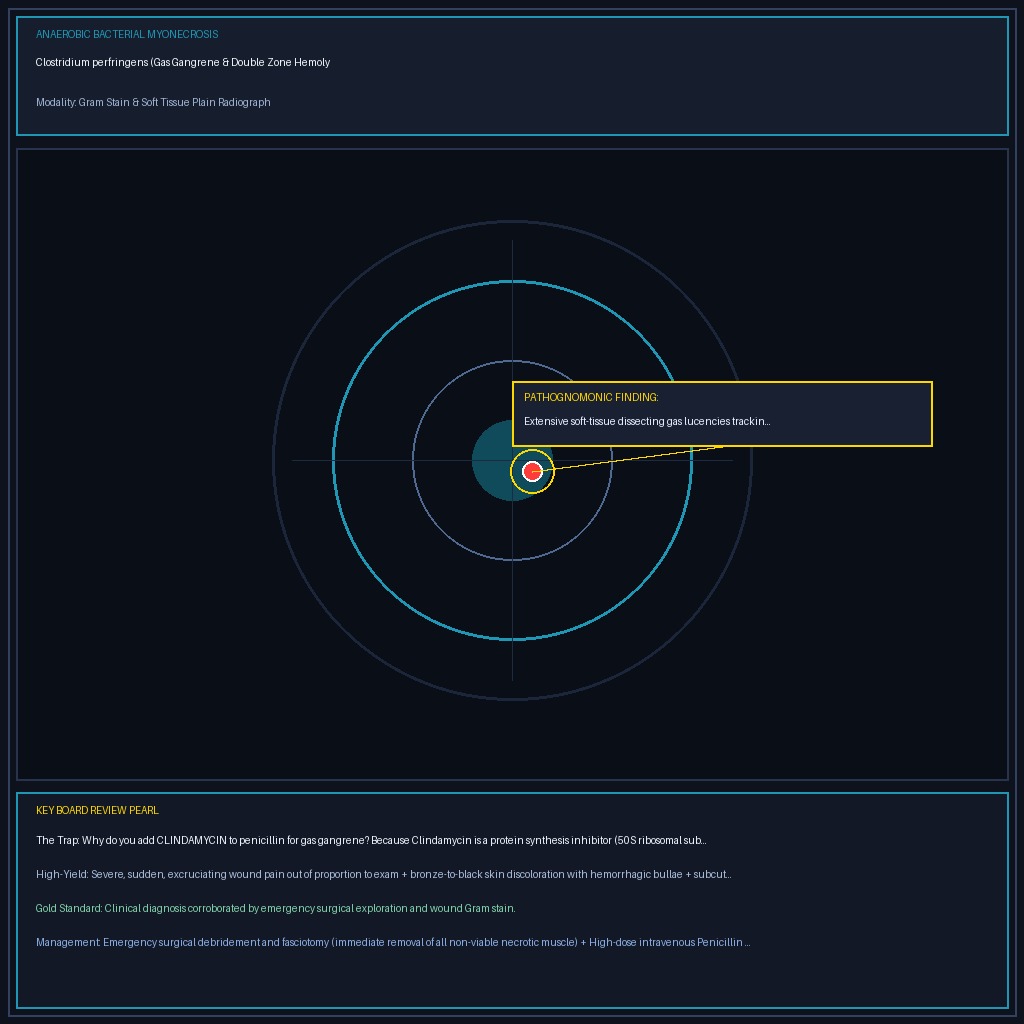
Clostridium tetani, botulinum, perfringens, difficile
Potent exotoxin producers. Spores survive boiling; killed by autoclaving.
Corynebacterium, Actinomyces, Nocardia
Club-shaped bacilli and true branching filamentous Gram-positive rods.
Gram-Negative Rods (Enterics & Respiratory)
MacConkey Lactose Fermentation → Oxidase → H2S Production
E. coli & Klebsiella pneumoniae
- ETEC: Watery traveler's diarrhea (heat-labile LT stimulates cAMP; heat-stable ST stimulates cGMP).
- EHEC (O157:H7): Shiga-like toxin, dysentery, HUS (triad: microangiopathic hemolytic anemia, thrombocytopenia, acute kidney injury). Does NOT ferment sorbitol!
- UPEC: P-fimbriae (pili) adhere to urothelium → #1 cause of UTI & pyelonephritis.
- Neonatal Meningitis: K1 capsular antigen!
Salmonella, Shigella, Proteus
Clear/white colonies on MacConkey. Differentiated by H2S on TSI agar and motility.
Pseudomonas aeruginosa
Obligate aerobe, non-lactose fermenter. Grape-like sweet fruity odor. Produces blue-green pyocyanin/pyoverdine pigment.
Exotoxin A: Inactivates elongation factor 2 (EF-2) by ADP-ribosylation, halting host cell protein synthesis (identical to Diphtheria toxin!).
Mnemonic PSEUDOMONAS:
Enterobacter, Serratia, Yersinia
Nosocomial invaders and cold-resistant zoonotic enterics.
Campylobacter, Vibrio, H. pylori
Characteristic morphology: curved rods, comma shapes, and S-shapes.
Neisseria, Haemophilus, Bordetella
Enriched medium requirements: Thayer-Martin and Chocolate agar.
Spirochetes Master Reference (Treponema, Borrelia, Leptospira)
Spiral-shaped bacteria with axial filaments (endoflagella). Diagnostic staining, clinical staging, and board-favorite buzzwords.
| Spirochete & Morphology | Transmission & Vector | Staging & Clinical Manifestations | Diagnostics & Treatment |
|---|---|---|---|
|
Treponema pallidum Corkscrew motility, axial fibrils |
Sexual contact, transplacental (TORCH) |
Primary: Single painless hard chancre with indurated base. Secondary: Diffuse maculopapular rash on palms and soles, condyloma lata (broad flat lesions), moth-eaten alopecia. Tertiary: Gummas (chronic granulomatous lesions), thoracic aortic aneurysm (tree-bark aorta from endarteritis obliterans of vasa vasorum), Tabes dorsalis (dorsal column ataxia, Romberg +), Argyll Robertson pupil (accommodates but does not react to light). Congenital: Saber shins, saddle nose, Hutchinson notched incisors, mulberry molars, sensorineural deafness. |
Darkfield microscopy for chancre fluid. Screening: VDRL/RPR (non-treponemal cardiolipin). Confirmatory: FTA-ABS. Rx: Benzathine Penicillin G. Watch for Jarisch-Herxheimer reaction (acute fever, chills, hypotension within hours of penicillin due to spirochete lysis and endotoxin release). |
|
Borrelia burgdorferi Loosely coiled spirochete, Wright/Giemsa |
Ixodes scapularis (deer tick); Northeast US |
Stage 1 (Early localized): Erythema migrans (bulls-eye rash), flu-like illness. Stage 2 (Early disseminated): Bilateral Bell facial palsy, AV conduction block / myocarditis, migratory arthralgias. Stage 3 (Late persistent): Chronic asymmetric monoarthritis (knee), peripheral neuropathy, encephalopathy. |
Two-tier serology: ELISA followed by Western blot. Rx: Doxycycline (Amoxicillin in pregnant patients or children <8). Ceftriaxone for heart block / CNS disease. |
|
Leptospira interrogans Hook-ended "question mark" spirochete |
Water contaminated with animal urine (rats, dogs, livestock); surfers, triathletes, sewage workers in Hawaii/tropics |
Leptospirosis (Mild): Sudden flu-like illness, high fever, severe headache, prominent calf myalgias, and conjunctival suffusion (bilateral red eyes WITHOUT inflammatory exudate). Weil Disease (Severe icterohemorrhagic): Triad of profound jaundice / hepatic failure, acute kidney failure (azotemia), and hemorrhagic diathesis with pulmonary hemorrhage. |
Darkfield microscopy, serology (microscopic agglutination test - MAT). Rx: Doxycycline (mild) or IV Penicillin G (severe Weil disease). |
Zoonotic & Vector-Borne Infections
Tick vectors, animal reservoirs, distinctive rash morphologies, and first-line antimicrobial regimens.
| Pathogen & Classification | Vector & Reservoir | Clinical Features & Classic Board Presentation | Diagnosis & First-Line Treatment |
|---|---|---|---|
| Borrelia burgdorferi (Spirochete) | Ixodes scapularis (deer tick); White-footed mouse (larvae), White-tailed deer (adult) | Stage 1: Erythema migrans (bulls-eye rash), flu-like illness. Stage 2: Bilateral Bell palsy, AV conduction block (carditis), migratory arthralgias. Stage 3: Chronic monoarthritis (knee), encephalopathy. | Doxycycline (or Amoxicillin in pregnant / kids <8). Ceftriaxone for heart block / CNS. |
| Babesia microti (Protozoan) | Ixodes scapularis (same deer tick vector as Lyme; co-infection is common!) | Hemolytic anemia, fever, jaundice, hemoglobinuria, hepatosplenomegaly. Asplenic patients have life-threatening fulminant disease. | Maltese cross / intraerythrocytic ring forms on Giemsa blood smear. Atovaquone + Azithromycin. |
| Anaplasma phagocytophilum | Ixodes scapularis; Northeast / Upper Midwest US | High fever, headache, severe myalgias, leukopenia, and thrombocytopenia. Rash is rare (<10%). | Morulae (mulberry-like cytoplasmic inclusions) inside granulocytes / neutrophils. Doxycycline. |
| Ehrlichia chaffeensis | Amblyomma americanum (Lone Star tick); South-Central / SE US | High fever, rigors, leukopenia, thrombocytopenia, elevated AST/ALT. Rash seen in ~30%. | Morulae inside monocytes. Mnemonic: MEGA (Monocytes = Ehrlichia, Granulocytes = Anaplasma). Doxycycline. |
| Rickettsia rickettsii (RMSF) | Dermacentor variabilis / andersoni (dog / wood tick); North Carolina, Oklahoma, SE | Severe headache, high fever, vasculitis. Rash starts peripherally on wrists and ankles and spreads centripetally to trunk. Involves palms and soles! | Endothelial tropism → necrotizing vasculitis. Treat immediately with Doxycycline (even in kids). |
| Francisella tularensis | Dermacentor ticks, deer flies, contact with wild rabbits / rodents | Ulceroglandular tularemia: painful necrotizing cutaneous ulcer with massive regional painful lymphadenopathy. Aerosol exposure causes fatal pneumonic tularemia. | Biosafety Level 3 pathogen (potential bioweapon). Treatment: Streptomycin or Gentamicin. |
| Bartonella henselae | Cat scratches / bites, cat fleas (Ctenocephalides) | Immunocompetent: Cat scratch disease (subacute regional lymphadenopathy, stellate necrotizing granulomas). Immunocompromised (HIV): Bacillary angiomatosis (vascular red-purple papules resembling Kaposi sarcoma) and peliosis hepatis. | Warthin-Starry silver stain positive. Cat scratch: Azithromycin; Bacillary angiomatosis: Doxycycline or Erythromycin. |
| Pasteurella multocida | Normal oral flora of cats and dogs | Rapidly progressing, excruciatingly painful cellulitis and wound necrosis within <24 hours of a cat/dog bite. Can cause rapid osteomyelitis. | Gram-negative coccobacillus with bipolar staining. Treatment: Amoxicillin-Clavulanate (Augmentin). |
| Yersinia pestis (Plague) | Rodent fleas (Xenopsylla cheopis), prairie dogs in Southwestern US | Bubonic plague: sudden fever, chills, weakness, and extremely painful, swollen suppurative regional lymph nodes (buboes in groin/axilla). Septicemic and pneumonic forms fatal. | Bipolar "safety-pin" staining on Giemsa/Wayson stain. Treatment: Gentamicin or Streptomycin. |
| Coxiella burnetii (Q Fever) | Aerosols from placenta / amniotic fluid of cattle, sheep, goats | Acute: high fever, debilitating headache, severe retro-orbital pain, atypical pneumonia, and hepatitis (doughnut granulomas). Chronic: culture-negative endocarditis in patients with pre-existing valvular disease. | Obligate intracellular bacterium with spore-like stability. NO arthropod vector! Treatment: Doxycycline. |
Atypical, Cell-Wall-Deficient & Intracellular Pathogens
Pathogens that do not conform to standard Gram staining due to absence of cell wall, intracellular lifestyle, or minimal peptidoglycan.
Transmission: Aerosols from contaminated water sources (air conditioning cooling towers, hospital plumbing, hot tubs). No person-to-person transmission!
Presentation: Severe atypical pneumonia in elderly/smokers, high fever (>40°C), neurological symptoms (confusion, ataxia), watery diarrhea, and hyponatremia.
Diagnostic: Urine antigen test. Culture on Buffered Charcoal Yeast Extract (BCYE) agar supplemented with iron and L-cysteine. Rx: Levofloxacin or Azithromycin.
Structure: Completely lacks a peptidoglycan cell wall (naturally resistant to all beta-lactams!). Outer membrane contains sterols sequestered from host.
Presentation: "Walking pneumonia" in military recruits, college dorms, young adults. Persistent nonproductive hacking cough, diffuse patchy bilateral interstitial infiltrates on CXR that look much worse than patient appears.
Hallmarks: High titer of Cold Agglutinins (IgM antibodies that agglutinate RBCs at 4°C); can precipitate hemolytic anemia and Erythema Multiforme (target lesions). Rx: Macrolides or Doxycycline.
Biphasic Life Cycle: Elementary Body (EB) is infectious, "Enters" cell via endocytosis. Reticulate Body (RB) is metabolically active, "Replicates" via binary fission inside inclusions.
Serovar Subtypes:
• Serovars A, B, Ba, C: Trachoma (chronic follicular conjunctivitis leading to eyelid scarring and blindness).
• Serovars D–K: Urethritis, cervicitis, PID, ectopic pregnancy, reactive arthritis; neonatal staccato-cough pneumonia & conjunctivitis.
• Serovars L1, L2, L3: Lymphogranuloma venereum (LGV): painless genital ulcer followed by painful suppurative inguinal buboes with "groove sign".
Rx: Doxycycline (1st line) or single-dose Azithromycin. Treat co-infection with Ceftriaxone for N. gonorrhoeae.